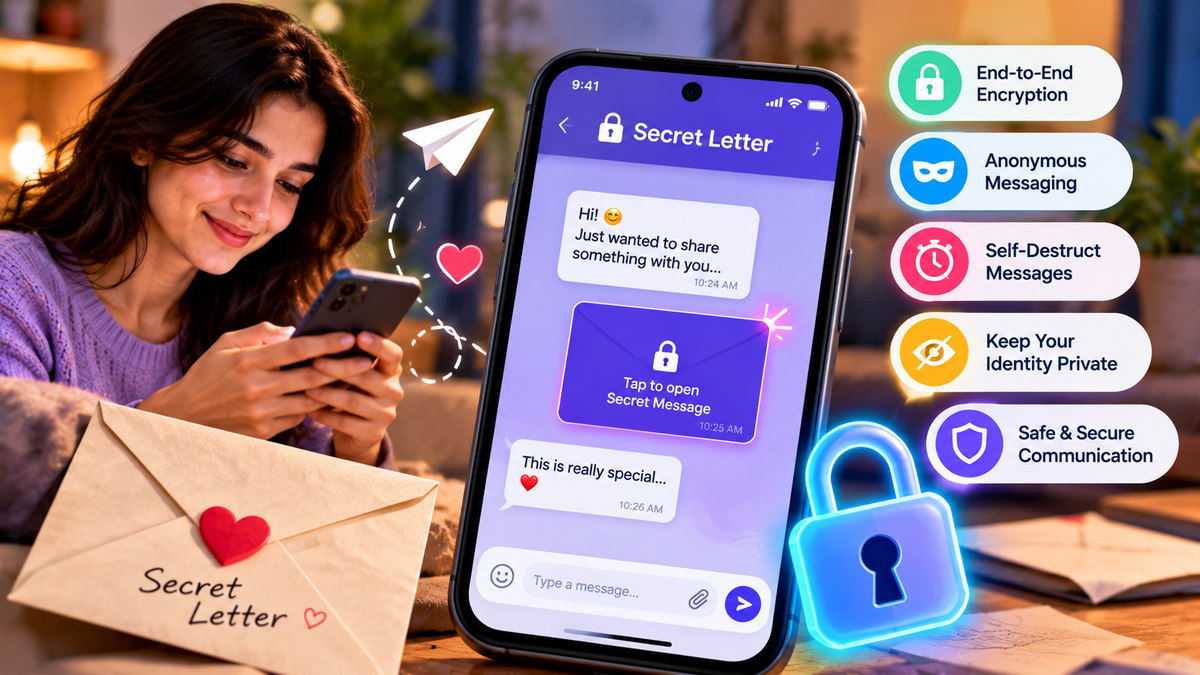
Secret letters have always been an interesting way to express thoughts, share feelings, and surprise someone. In the digital age, mobile applications have brought this experience to smartphones, allowing people to write private notes, schedule messages for future dates, and receive anonymous messages through special links.
These applications offer several creative possibilities. You can write a letter to your future self, send a birthday message that arrives at midnight, or share a compliment without immediately revealing your identity. Some services also provide decorative envelopes, handwritten-style fonts, and interactive animations that make digital messages feel more personal.
However, not every application described as a secret letter app works in the same way. Some are designed around private letters sent to selected recipients, while others allow strangers to send anonymous messages through a public link. These differences can affect your privacy, security, and overall experience.
In this guide, biographypadhe.com explains how secret letter apps work, which features to consider, what users should know about anonymous messaging, and how to choose an application that suits their needs.
What Are Secret Letter Apps?
Secret letter apps are digital communication tools that allow users to send or receive messages in a more private, creative, or anonymous format than ordinary text messaging.
Depending on the application, a secret letter may be a message delivered at a scheduled time, a private note sent through a link, or an anonymous message received through a personal profile.
The main appeal is the experience surrounding the message. Instead of simply receiving a notification, users might see an envelope animation, open a virtual letter, or discover a message that someone has prepared in advance.
These applications can be useful for sending heartfelt notes, planning surprises, exchanging compliments, or recording personal reflections.
However, the term secret does not necessarily mean that a message is encrypted or completely private. The level of protection depends on the application’s technology, privacy settings, and data-handling practices.
Before installing an app, it is important to understand which type of communication it supports.
The Two Main Types of Secret Letter Apps
Although these applications may share similar designs, their underlying purposes can be quite different.
1. Scheduled Letter Applications
Scheduled letter applications let you write a message and select a future delivery date. The recipient might receive it the next day, on a birthday, or months after the letter was written.
Some applications also allow users to write letters to themselves. For example, you could describe your current goals, record an important life event, and arrange to revisit the letter a year later.
These services are useful for:
- Sending birthday and anniversary messages in advance.
- Preparing thoughtful notes for friends and family.
- Recording personal goals and reflections.
- Creating digital time capsules.
- Planning a surprise for a special occasion.
One advantage is that the sender generally chooses the recipient and delivery time. This creates a more controlled experience than opening a profile to receive messages from unknown people.
Nevertheless, future delivery is not guaranteed indefinitely. A service could shut down, change its terms, or lose access to stored messages. Review its backup and export options before relying on it for an important letter.
2. Anonymous Message Applications
Anonymous messaging applications work differently. They usually provide a personal link, username, or QR code that can be shared with other people.
Someone who opens the link can submit a message without displaying their name to the recipient. The message then appears in the profile owner’s inbox or dashboard.
Some applications include additional features, such as optional identity disclosure, message filtering, or hints about the sender.
These tools can encourage playful conversations and positive feedback. They can also create problems when users send offensive messages, spread rumors, impersonate others, or misuse anonymity.
Another important distinction is that anonymity from the recipient does not necessarily mean anonymity from the service provider. Depending on its systems and policies, an application may collect technical information about users and their activities.
For this reason, anonymous messaging deserves more careful consideration than an ordinary scheduled letter.
How Do Anonymous Letter Links Work?
The process is usually straightforward.
First, a user creates a profile or opens an existing account. The application generates a link or another method of accessing the user’s message page.
The user can then share that link through a social media profile, private chat, or other communication channel. People who open it can submit messages through the service’s interface.
The recipient sees the submitted messages in their inbox. Depending on the platform, they may be able to reply, delete a message, report it, or block further communication.
Some services offer identity-related features, but their exact meaning varies. A hint about someone’s device, location, or activity does not necessarily establish who sent a message.
Users should also remember that anyone who obtains a publicly shared link may be able to submit a message, depending on the service’s settings. A link intended for friends can reach a much wider audience when posted publicly.
Before sharing an anonymous messaging link, check who can access it, what information is visible, and whether unwanted messages can be filtered or reported.
The NGL Case: Why Users Should Be Careful
Anonymous messaging has attracted regulatory scrutiny, particularly when services have been marketed to younger users.
In July 2024, the U.S. Federal Trade Commission and the Los Angeles County District Attorney’s Office took action against NGL Labs and its co-founders over the NGL anonymous messaging application.
According to the agencies, the company’s practices included sending messages that appeared to come from real people, misleading users about the ability to identify message senders through a paid subscription, and failing to obtain proper consent for certain recurring charges. The agencies also challenged the company’s claims about filtering harmful messages and its marketing to children and teenagers.
The case resulted in a settlement involving $5 million in total payments, including $4.5 million intended for consumer refunds and a $500,000 civil penalty. The settlement also prohibited the company and its co-founders from offering anonymous messaging apps to users under 18.
Readers can review the official FTC announcement about the NGL settlement.
This case does not mean that every anonymous messaging service operates improperly. It demonstrates why users should examine a service’s actual features, payment conditions, privacy practices, and moderation systems rather than trusting promotional claims alone.
A paid feature that promises to reveal a sender’s identity deserves particular scrutiny. Read exactly what the service promises to disclose before making a purchase.
Important Features to Look For
The right features depend on whether you want to send private letters, receive anonymous messages, or do both.
Scheduled Delivery
Scheduled delivery is useful for messages tied to birthdays, anniversaries, holidays, and other meaningful events.
Look for clear information about delivery dates, time zones, notifications, and whether the message can be edited or cancelled before delivery.
If a letter is important, check whether the application lets you save or export it independently.
Customizable Letter Designs
Some applications let users customize fonts, colors, backgrounds, and envelope styles.
These options can make a message feel more personal than a standard text notification. Birthday themes, decorative borders, and handwriting-inspired fonts may be useful for special occasions.
However, design features should not take priority over essential matters such as privacy, reliability, and account security.
Photo, Audio, and Video Attachments
Certain services allow attachments such as photographs, voice recordings, or short videos.
These features can make letters more expressive, but attachments can also contain sensitive information. Consider whether the recipient can save, forward, or copy the content.
Before sending a private photograph or recording, check how the service stores uploaded files and whether messages can be deleted.
Identity Disclosure Controls
Some anonymous messaging services include optional identity-reveal features or provide clues about who sent a message.
The details vary by platform. Do not assume that a paid subscription will reveal a person’s actual name unless the service clearly explains how identification works and what evidence supports it.
Avoid paying for vague promises about discovering an anonymous sender.
Blocking and Reporting
For services that accept anonymous submissions, blocking and reporting are essential safety features.
Users should be able to report abusive messages, prevent unwanted contact where possible, and find clear instructions for obtaining support.
Filtering systems may help reduce harmful content, but automated moderation is not perfect. Always examine the service’s available controls instead of assuming that every message will be screened successfully.
Are Secret Letter Apps Safe to Use?
Secret letter applications can be useful, but their safety depends on how the service operates and how users interact with it.
The first step is reviewing the privacy policy. Find out which information is collected, how messages are stored, whether information is shared with third parties, and whether uploaded content may be used to improve the service.
Next, examine the permissions requested by the application. A letter-writing service may need access to selected photos if you want to attach images, but requests for unrelated permissions deserve closer attention.
Also consider account security. Use a strong, unique password when an account is required, and enable additional authentication if available.
For anonymous messaging applications, establish clear boundaries. You do not have to respond to every message, reveal personal information, or continue using a service that makes you uncomfortable.
Parents and guardians should pay special attention when younger users are involved. Discuss the potential for bullying, inappropriate messages, unwanted contact, and online pressure before a child uses an anonymous messaging platform.
How to Protect Your Privacy When Sending Secret Letters
A few simple habits can help reduce unnecessary risks.
Avoid sharing sensitive personal information. Do not send your home address, passwords, banking details, identification documents, or verification codes through an anonymous messaging service.
Check links before opening them. An anonymous message may contain a suspicious URL, an impersonation attempt, or a request for personal information. Avoid clicking unfamiliar links.
Understand what anonymity means. A recipient might not see a sender’s identity, but the service may still collect technical information. Do not assume that online activity is completely untraceable.
Review subscription details. Check whether payment is one-time or recurring, how much it costs, and how cancellation works. Be especially cautious when a paid feature makes an unclear promise about revealing someone’s identity.
Limit public exposure. Sharing an anonymous-message link on a public profile can invite submissions from strangers. Share it selectively or restrict access when the service provides appropriate controls.
Keep evidence of serious harassment. If someone sends threats or persistent abusive messages, preserve relevant screenshots and report the content. Use the platform’s blocking tools and seek help from a trusted person when necessary.
These precautions can make the experience more manageable without removing the creative benefits of private digital letters.
Creative Ways to Use Secret Letter Applications
When used thoughtfully, secret letter apps can support positive and meaningful interactions.
Write a Letter to Your Future Self
Record what you hope to accomplish over the coming months. Include goals, lessons, and memories that you want to revisit later.
A scheduled message can serve as a reminder of how your priorities and perspective change over time.
Plan a Birthday Surprise
Prepare a birthday message in advance so that it arrives at a chosen time. You can include a personal story, a favorite memory, or a thoughtful expression of appreciation.
Share an Encouraging Message
An anonymous compliment can help someone feel appreciated when it is respectful and sincere. Avoid comments about sensitive personal characteristics or messages that could make the recipient uncomfortable.
Organize a Mystery Game
Friends can exchange clues during a party or celebration. Each message can reveal part of a story, leading participants toward a final surprise.
For a positive experience, agree on the game’s rules and avoid sharing private information or embarrassing participants.
Preserve Personal Memories
A digital letter can capture your thoughts about an important event, relationship, or achievement. For long-term preservation, save a separate copy rather than relying entirely on an application’s future availability.
Frequently Asked Questions
Are secret letter apps free?
Some applications offer basic messaging or scheduled letters at no cost, while others charge for additional designs, attachments, or premium features. Check the current pricing and subscription conditions before registering.
Can an anonymous message reveal who sent it?
Not necessarily. Some applications offer clues, but a clue is not proof of identity. Be cautious when a service promises to reveal a sender’s name in exchange for payment.
Are scheduled letters more private than anonymous messages?
They can be easier to control because the sender selects a recipient and delivery time. However, privacy still depends on the service’s security, storage practices, and access controls.
Can I schedule a letter years into the future?
Some services support long-term scheduling, but availability depends on the platform. A service may close or change its policies before the delivery date. Keep an independent copy of important letters.
Can anonymous messaging apps be used for bullying?
Yes. Anonymity can be misused for harassment, threats, or hurtful comments. Choose services with reporting and blocking tools, and avoid sharing a messaging link publicly if you are uncomfortable receiving messages from strangers.
Should teenagers use anonymous messaging apps?
The answer depends on the particular service, its age restrictions, available safety controls, and the user’s circumstances. Parents and guardians should review these factors and discuss online safety before allowing access. Always follow the application’s stated minimum-age requirements.
Final Thoughts
Secret letter apps offer an interesting alternative to ordinary messaging. Scheduled delivery can make a birthday surprise more memorable, while virtual envelopes and personalized designs can add a thoughtful touch to everyday communication.
Anonymous messaging, however, involves different considerations. Public links can attract unwanted contact, paid identity features may not deliver what users expect, and privacy protections differ from one application to another.
Before choosing a service, review its features, privacy policy, age requirements, payment terms, and reporting options. Avoid sharing sensitive information, preserve important letters independently, and stop using any platform that repeatedly exposes you to unwanted or harmful messages.
The most useful secret letter application is not necessarily the one with the most elaborate animations or the most exciting anonymity features. It is the one that meets your needs, explains its limitations honestly, and gives you meaningful control over your communication.
At biographypadhe.com, we aim to help readers understand everyday digital tools, evaluate their benefits and limitations, and make informed decisions about technology.


